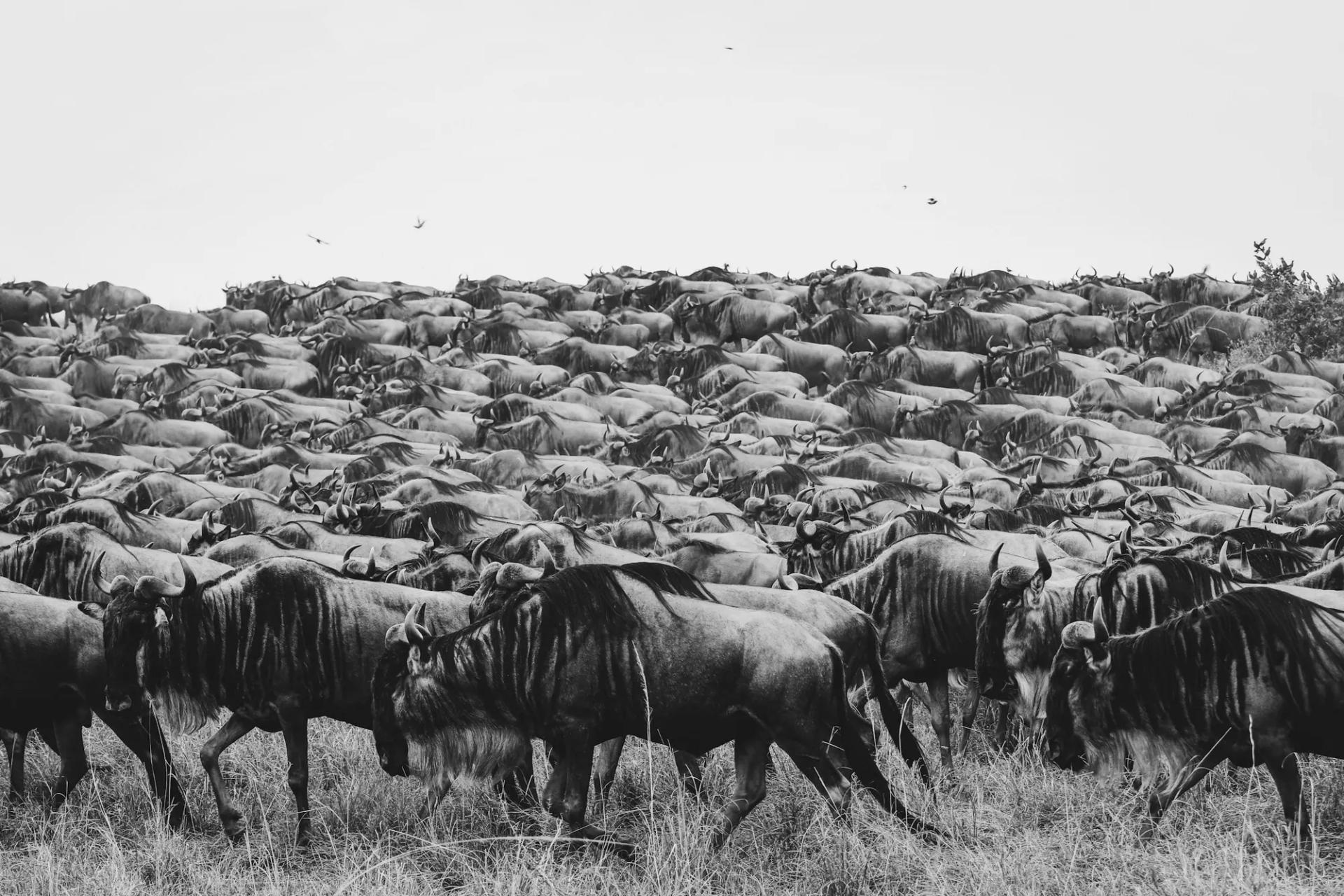
Every year, the migration herds return to the short-grass plains of the southern Serengeti and the Ngorongoro Conservation Area around Lake Ndutu. The grass here grows on volcanic soils rich in minerals, ideal for nursing mothers, and from about December to March the plains fill with wildebeest, zebra and gazelle.
What happens in calving season
Most wildebeest calves are born within a few weeks, typically peaking in February. A calf can stand within minutes and run with the herd soon after. That concentration of vulnerable young draws predators: lion prides, cheetah on the open plains, hyena clans and jackals. It is one of the best times of year to see hunting behaviour.
Why go
- Predator action on open plains with good visibility.
- Fewer vehicles than the northern river crossings in August and September.
- Green landscapes and clear air after the short rains – excellent light for photography.
- Off-road driving is allowed in parts of the Ndutu area, so guides can position vehicles well (rules apply).
Where to stay
Lodges and seasonal tented camps sit around Lake Ndutu and on the southern plains. Seasonal camps move to stay near the herds. Book early for February.
How long to go for
Two full days with the herds is the minimum we recommend. Most guests combine Ndutu with the Ngorongoro Crater (about two hours away) and Tarangire on a 5–7 day safari, or fly in for a dedicated calving safari.
Weather
Expect warm days and occasional afternoon showers. March can be wetter as the long rains approach.
Plan your calving safari
See our Ndutu calving season safaris and the Great Migration month by month.
FAQ
When is the Ndutu calving season?
Usually from about December to March, with the peak of births in February. Exact timing depends on the rains each year.
Is Ndutu in the Serengeti?
Lake Ndutu lies in the Ngorongoro Conservation Area on the border of the southern Serengeti; the calving plains stretch across both.