Full Moon Kilimanjaro Climb Guide: Dates, Tips & What to Expect
Full Moon Kilimanjaro Climb Guide: Dates, Tips & What to Expect
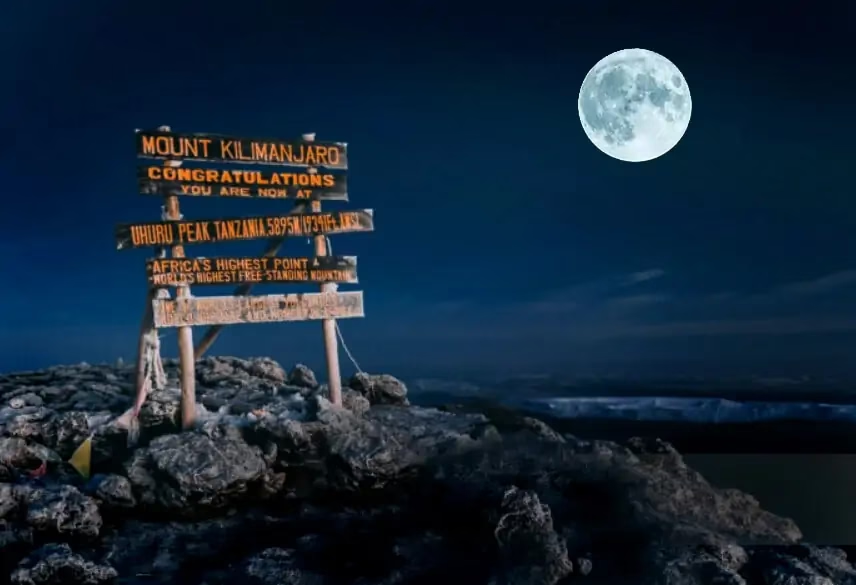
Climbing Mount Kilimanjaro under the light of a full moon is one of the most memorable ways to experience Africa’s highest mountain. As the moon rises over the surrounding landscape, the slopes of Kibo, glaciers, volcanic rocks and distant plains can take on a beautiful silver glow.
For many climbers, the most magical part comes during the final ascent. The summit attempt normally begins around midnight, allowing trekkers to climb through the night and reach Uhuru Peak in time for sunrise. When the summit night coincides with a bright full moon, the trail can feel completely different from a normal night ascent.
Kilimanjaro Full Moon Dates 2026, 2027, 2028, & 2029
| Month | 2026 | 2027 | 2028 | 2029 |
|---|---|---|---|---|
| January | January 3 | January 22 | January 12 | January 30 |
| February | February 2 | February 20 | February 10 | February 28 |
| March | March 3 | March 22 | March 11 | March 30 |
| April | April 2 | April 20 | April 9 | April 28 |
| May | May 1 | May 20 | May 8 | May 27 |
| June | May 31 / June 30 | June 19 | June 7 | June 26 |
| July | July 29 | July 18 | July 6 | July 25 |
| August | August 28 | August 17 | August 5 | August 24 |
| September | September 26 | September 15 | September 3 | September 22 |
| October | October 26 | October 15 | October 3 | October 22 |
| November | November 24 | November 14 | November 2 | November 21 |
| December | December 24 | December 13 | December 2 / December 31 | December 20 |
Why Choose a Full Moon Kilimanjaro Climb?
A full moon climb combines adventure, mountain scenery and an unforgettable night-time experience. On a clear night, moonlight can illuminate parts of the trail and surrounding landscape, providing additional natural light during the summit ascent.
The moon can also create spectacular views of the mountain’s volcanic terrain and glaciers. However, moonlight should be considered an added experience rather than a replacement for proper climbing equipment. Weather, cloud cover and the position of the moon can all affect visibility, so a headlamp should always be carried.
The lunar cycle is approximately 29.5 days, which means there are normally around 12–13 full moons each year. This gives climbers many opportunities to plan a Kilimanjaro adventure around a full moon.
What Is Summit Night Like?
Summit night is the most challenging part of a Kilimanjaro climb. Depending on the route and itinerary, climbers usually wake around 11:00 PM or midnight, have a light meal or snack, prepare their layers and begin the final ascent.
The climb is deliberately slow. At high altitude, conserving energy and maintaining a steady pace are more important than speed. The combination of cold temperatures, darkness, steep terrain and altitude makes the summit push physically and mentally demanding.
On a traditional summit schedule, climbers aim to reach Stella Point on the crater rim around sunrise and continue towards Uhuru Peak at 5,895 metres. The reward is an extraordinary sunrise from the Roof of Africa.
Full Moon vs. New Moon on Kilimanjaro
A full moon is not necessarily the best choice for every climber.
If your priority is moonlit mountain scenery and better natural visibility, a full moon can be an excellent choice. The bright moon can illuminate the surrounding landscape and make the night ascent particularly atmospheric.
If your priority is stargazing and astrophotography, however, a new moon may be more suitable because the darker sky provides better conditions for seeing stars and the Milky Way.
At Frati Safaris, we can help you choose your climbing dates according to the type of mountain experience you want.
Request a Full Moon Climb Quote
Does the Full Moon Make the Climb Easier?
Moonlight may improve visibility on a clear night, but it does not reduce the altitude, cold, steepness or physical demands of summit night. Climbers should still be properly prepared with suitable clothing, footwear, headlamp, gloves and other essential mountain equipment.
Even during a full moon, clouds or poor weather can significantly reduce visibility. For this reason, your headlamp remains an essential item throughout the summit attempt.
The most important factors for a successful Kilimanjaro climb remain appropriate acclimatization, a sensible pace, good preparation and following the guidance of your mountain crew.
Is a Full Moon Summit More Crowded?
Full-moon summit nights can be particularly popular because many climbers want to experience the mountain under bright moonlight. Some experienced climbers and operators report that the full-moon summit night can therefore be busier than other nights.
If avoiding crowds is important to you, we can discuss alternative summit dates close to the full moon or consider another period that better matches your preferences.
You do not always have to stand on Uhuru Peak on the exact astronomical full-moon date to enjoy beautiful moonlight. The nights immediately before and after the full moon can also provide excellent illumination, depending on the moon’s position and weather conditions.
Which Kilimanjaro Routes Can Be Used for a Full Moon Climb?
A full moon experience can be planned around several Kilimanjaro routes, including:
- Lemosho Route – Known for its scenic approach and gradual acclimatization.
- Machame Route – A popular trekking route with varied landscapes.
- Rongai Route – Approaches Kilimanjaro from the northern side.
- Marangu Route – The only main route offering hut accommodation.
- Northern Circuit – A longer route designed to provide more time for acclimatization.
- Umbwe Route – A more demanding and steeper approach.
The best route depends on your fitness, available time, previous trekking experience and preference for scenery, accommodation and acclimatization. A longer itinerary is generally preferable when the goal is to maximize time for altitude adjustment rather than simply choosing the shortest climb.
What Should You Pack for a Full Moon Summit?
Although moonlight can brighten the trail, you should prepare for a normal night ascent.
Essential items include:
- Headlamp with spare batteries
- Warm thermal layers
- Insulated jacket
- Waterproof and windproof outer layers
- Warm gloves
- Wool or thermal socks
- Comfortable trekking boots
- Sunglasses and sunscreen
- Water bottles or hydration system
- Trekking poles
- Personal medication and basic essentials
- Camera or smartphone for the moonlit scenery
Your guide will also advise you on the equipment required for your specific route and season.
Best Time to Plan Your Full Moon Kilimanjaro Climb
There is no single month that guarantees perfect summit conditions. Kilimanjaro’s weather changes throughout the year, and cloud cover can affect the visibility of the moon.
For this reason, we recommend considering both the full moon date and the expected mountain conditions when choosing your trekking dates.
A full moon can make the experience visually spectacular, but a clear sky is what allows you to fully enjoy the moonlit landscape.

All Categories
Recent Posts
Tanzania Mandatory Travel Insurance 2026: USD 44 & New Rules
Great Migration in Tanzania:2026/2027 Ultimate Planning Guide and Key Considerations